
Aaron Foyer
Director, Research
Aaron Foyer
Director, Research
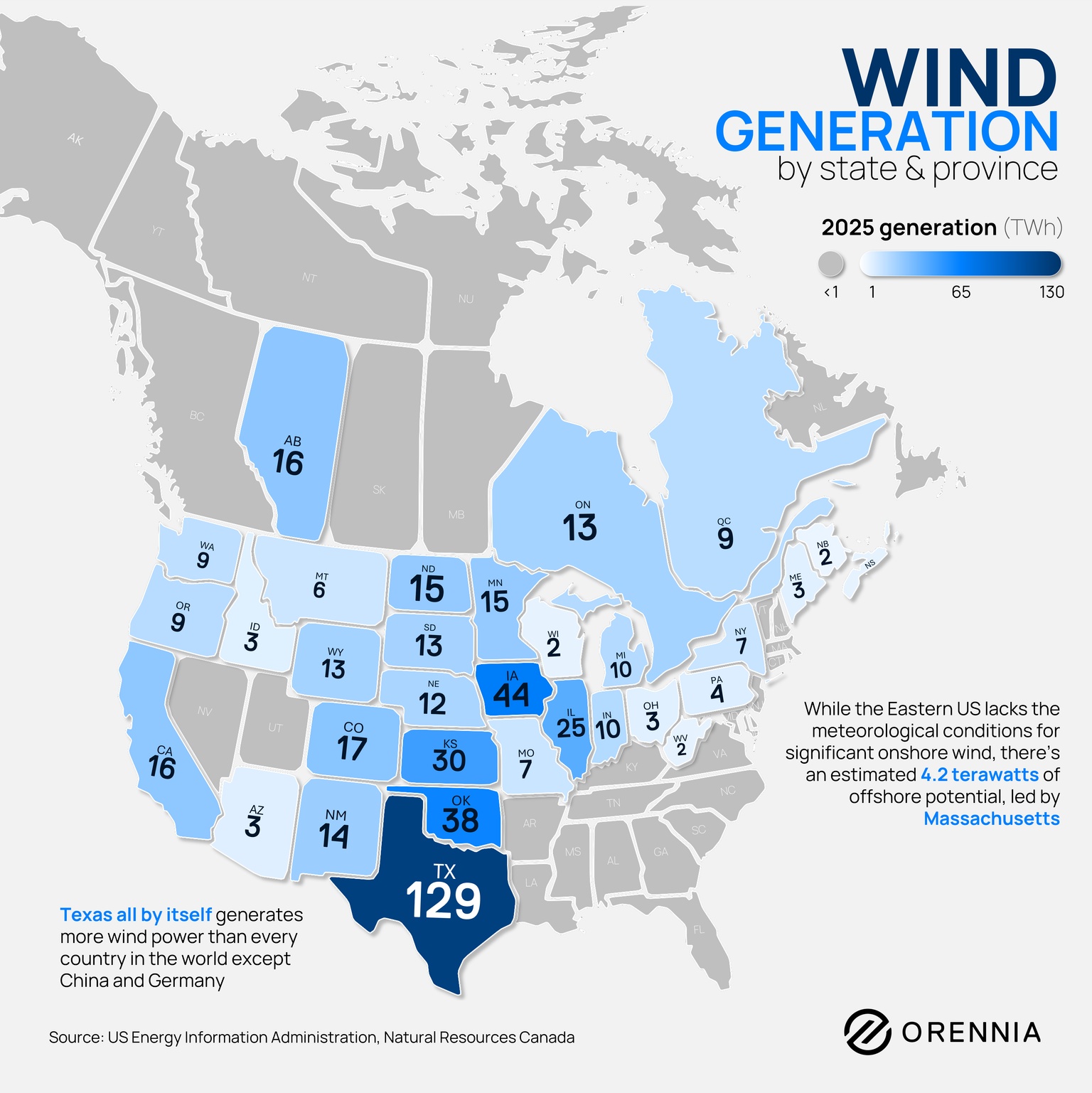
Wind power has quietly become one of the most consequential energy stories in North America. US wind capacity grew from 45 GW in 2010 to 162 GW today, and wind now supplies 11% of all US electricity, according to data from the US Energy Information Administration.
The regional basis: The Great Plains is essentially a 3,000-kilometre runway for wind. Stretching from Texas up through the Canadian prairies, it's flat, open, and sits at the crossroads of cold Arctic air pushing south and warm Gulf air pushing north.
No state illustrates this better than Texas. At 129 terawatt-hours, Texas alone generates 28% of the nation's total wind production, more than double the output of Iowa, the next highest state. That puts a single US state ahead of Brazil, India, and within striking distance of Germany on a global wind generation basis.
Canada is earlier in its buildout, but Alberta's 16 TWh hints at what the prairies can do, and Atlantic Canada is moving fast. Nova Scotia, home to one of the top three wind regimes in the world, has set a target of 5 GW of offshore wind leases by 2030.
The new demand wildcard: AI
Big Tech companies accounted for 43% of all clean energy PPAs signed globally in 2024, with AI expansion plans becoming the single largest driver of new corporate renewable procurement. Wind, particularly onshore in the Plains where data centers are increasingly being sited, is a direct beneficiary.
+Bonus infographic: The Top Source of New Electricity in the US and Canada, 2025

Insights for an evolving energy landscape delivered to your inbox.