
Aaron Foyer
Director, Research
Aaron Foyer
Director, Research
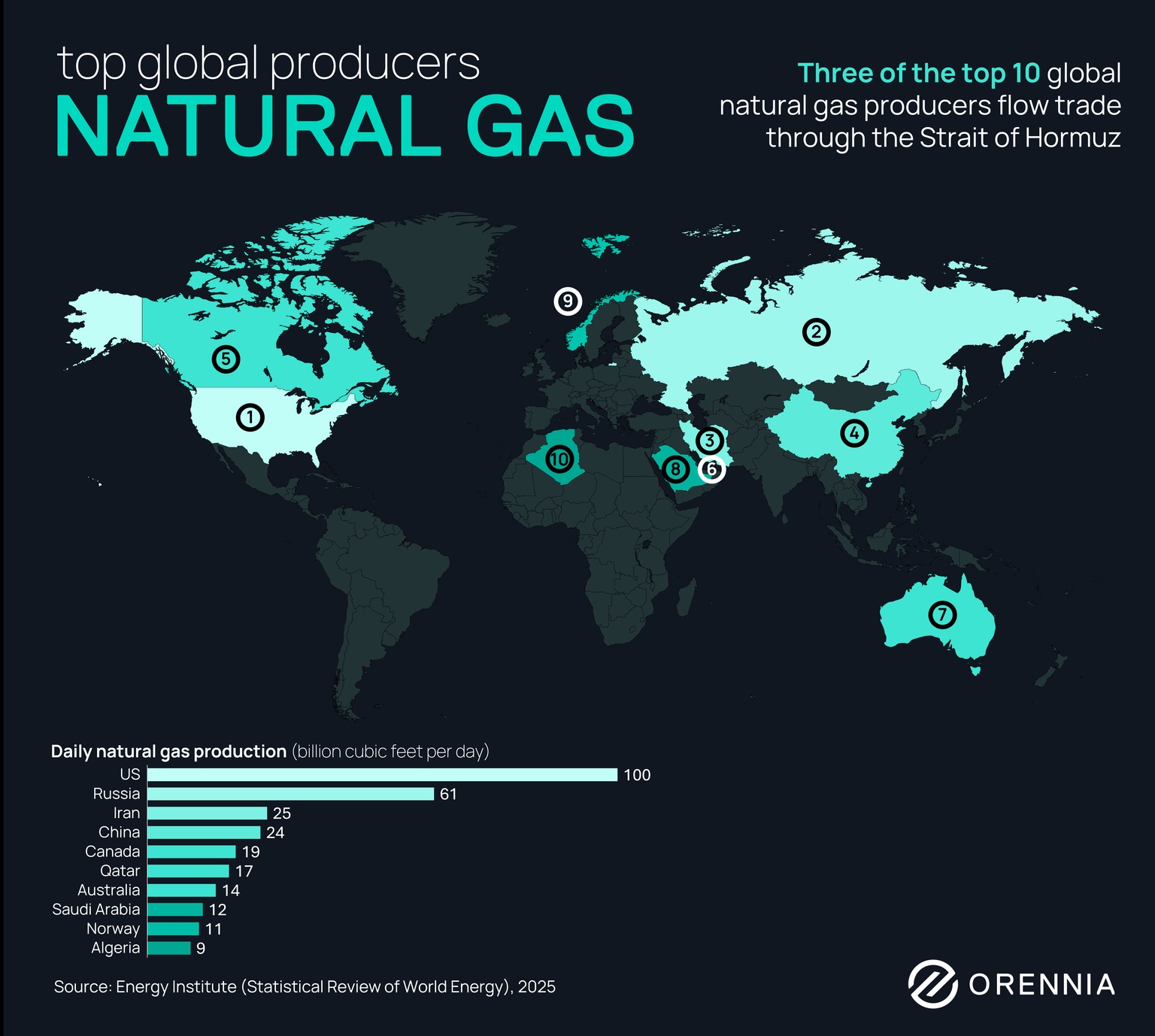
Natural gas quietly powers much of the modern world, heating homes, generating electricity and feeding petrochemical supply chains. A small number of countries control most of it, with the United States, Russia, Iran, and China together supplying more than half of everything the world produces, according to data from the Energy Institute’s Statistical Review of World Energy report.
The United States has been the world's largest producer of natural gas since 2011, and by the first half of 2025 was averaging 106 billion cubic feet per day. On top of that, the U.S. has transformed into the world's largest LNG exporter, giving it commercial reach across Europe and Asia that Russia and Qatar once monopolized.
Iran blew up the global gas market: Following joint US-Israeli strikes on Iranian territory in late February, Iran all but blocked shipments through the Strait of Hormuz, the narrow waterway that handles around a quarter of global seaborne oil trade and a fifth of global LNG supply. Following the closure of the strait, LNG deliveries were stranded, forcing QatarEnergy to declare force majeure on many of its exports. European natural gas futures have jumped 60% following the strikes on Qatar, while LNG tanker freight rates surged more than 40% in a single day.
North America is insulated: While gasoline and diesel prices have jumped in the US and Canada, it’s expected that both countries will be some of the last to feel the full brunt of a global gas crunch. North America is a net exporter of natural gas and all its LNG facilities are running at capacity, leaving little room for additional exports.

Insights for an evolving energy landscape delivered to your inbox.