
Aaron Foyer
Director, Research
Aaron Foyer
Director, Research
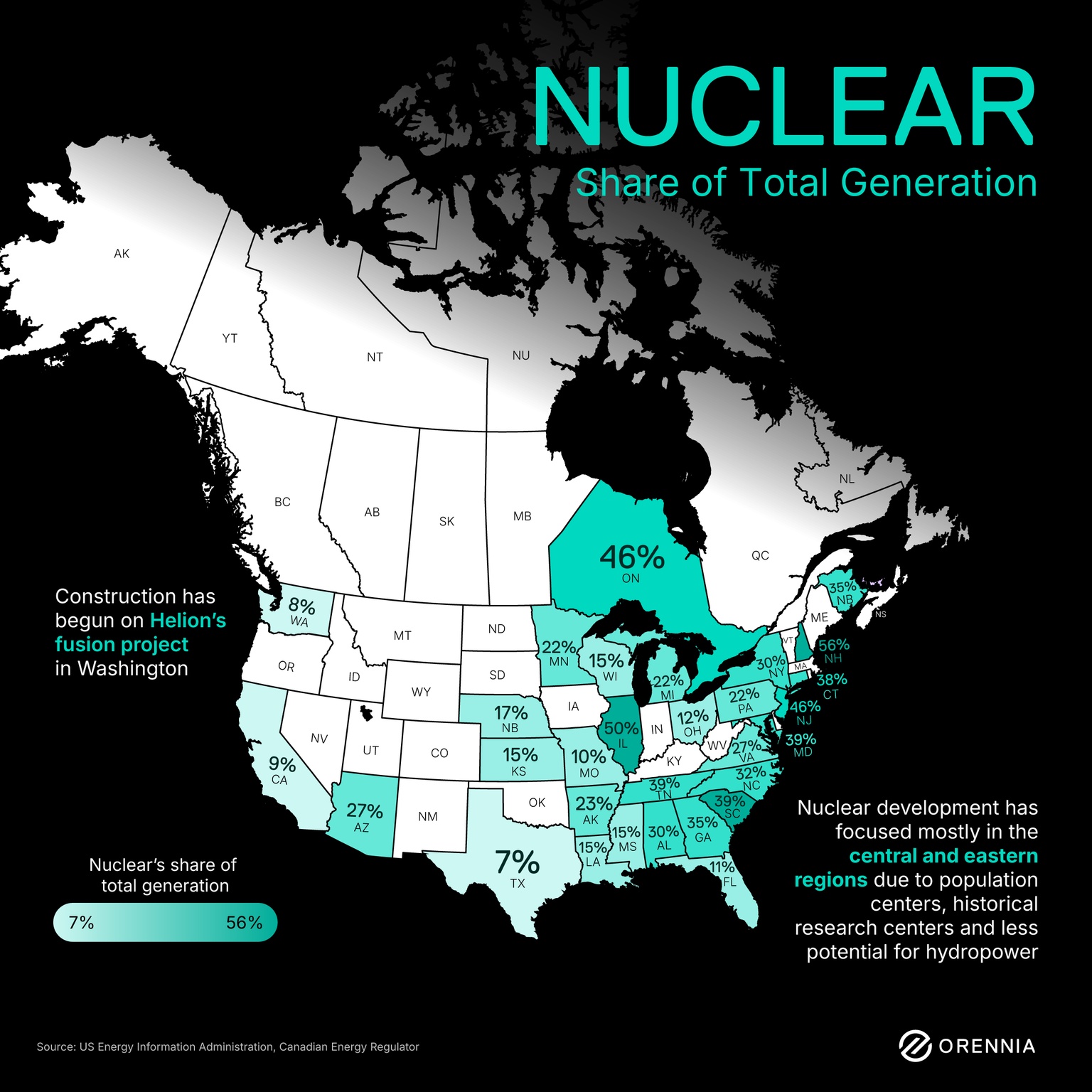
Nuclear power has been a cornerstone of North American electricity generation for nearly 70 years.
The atom goes to work: The Shippingport Atomic Power Station opened in 1957 on the Ohio River near Pittsburgh, becoming the first commercial nuclear power plant in the world, operating as part of President Eisenhower's Atoms for Peace program. The 1965 Northeast blackout prompted a push for nuclear as a necessary alternative and the 1973 OPEC oil embargo only accelerated the case.
By the time Shippingport was decommissioned in 1982, more than 100 nuclear reactors were generating about 19% of the nation's electricity, making it the second-largest power source in the US behind coal. 46 new reactors were commissioned in the 1980s alone.
Why the East? Nuclear plants require massive amounts of cooling water to handle waste heat discharge, with every three units of energy produced, two are discharged as heat. The Great Lakes, river systems and Atlantic coastline in the East provided what the arid West largely could not.
On top of that, the dense population zones and industrial corridors in the Northeast, Midwest and Ontario concentrated electricity demand, which helped justify the large upfront costs of nuclear power stations.
The next wave: The US is anchoring its nuclear revival around two federally funded SMR projects: Tennessee Valley Authority’s BWRX-300 at Clinch River and Holtec deploying two SMR-300 at Palisades in Michigan, both targeting first power in the early 2030s.
In Canada, the Darlington site east of Toronto received its construction license in April of last year, with the first 300-megawatt SMR targeting grid connection by end of 2030, which would make it the first grid-scale small modular reactor in the G7.
Insights for an evolving energy landscape delivered to your inbox.