
Aaron Foyer
Director, Research
Aaron Foyer
Director, Research
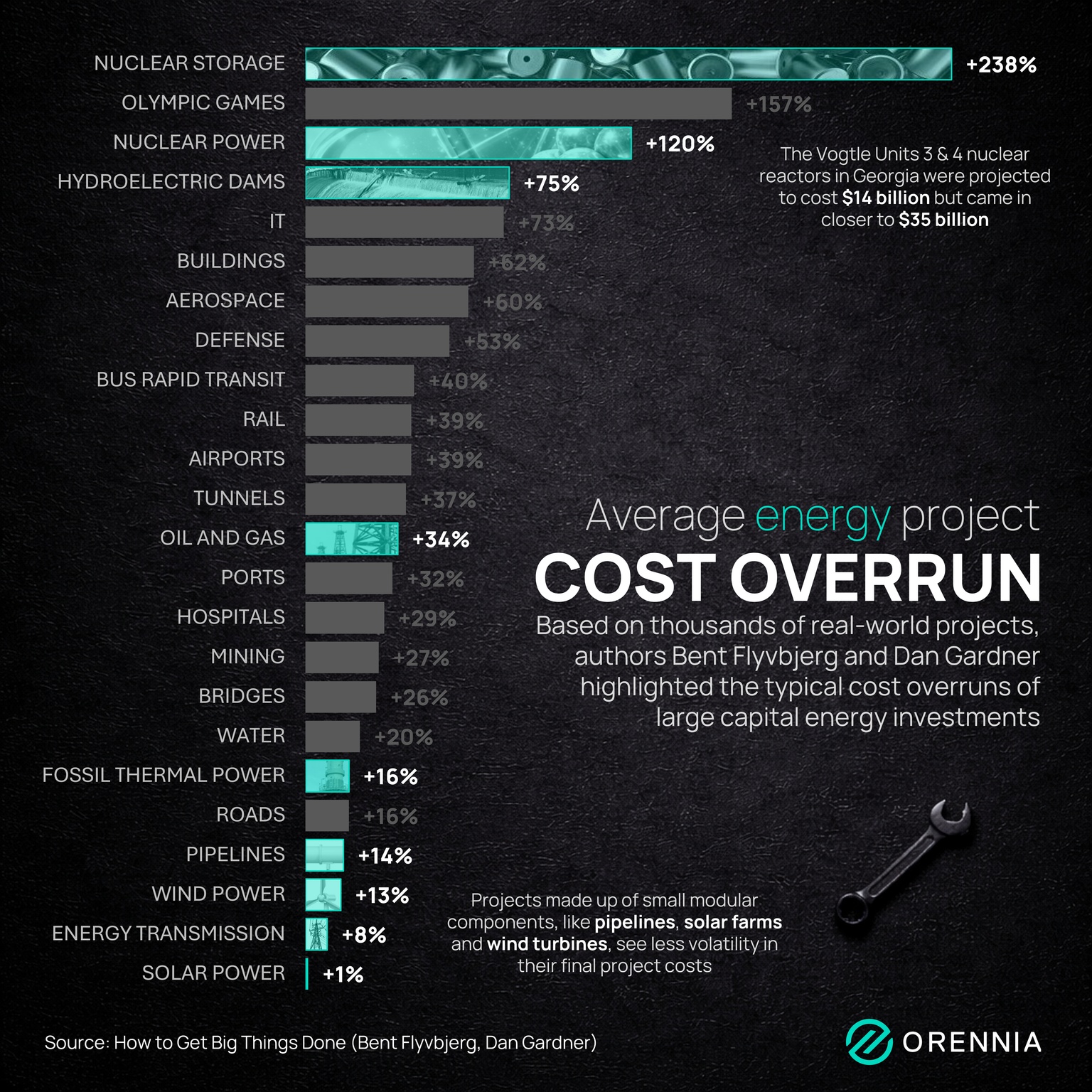
Energy projects are notorious for going over budget.
The 2.2-gigawatt Snowy Hydro pumped hydropower storage project in Australia was first budgeted to cost $2 billion when it was announced but is now projected to cost closer to $13 billion. Vogtle 3 and 4, the first two nuclear reactors built in the US in decades, were expected to cost $14 billion but came in closer to $35 billion. And the Trans Mountain Expansion pipeline was initially estimated at $5.4 billion but the latest estimates from the Canadian government are around $34 billion.
It’s not just energy projects that often face cost overruns; many large capital projects do. Analysis of thousands of real-world infrastructure projects shows that nuclear projects experience some of the highest average cost overruns in the energy sector (exceeding 238%), while solar, wind and energy transmission projects typically remain much closer to budget. According to research by Bent Flyvbjerg and Dan Gardner, smaller, modular energy projects like wind and solar consistently deliver more predictable capital outcomes than large, bespoke projects like nuclear plants or hydroelectric dams.
+Additional reading: How Big Things Get Done
Insights for an evolving energy landscape delivered to your inbox.