
Aaron Foyer
Director, Research
Aaron Foyer
Director, Research
How will global energy demand change by 2050? The world’s appetite for energy keeps growing, but at a slower pace as electrification increases energy efficiency.
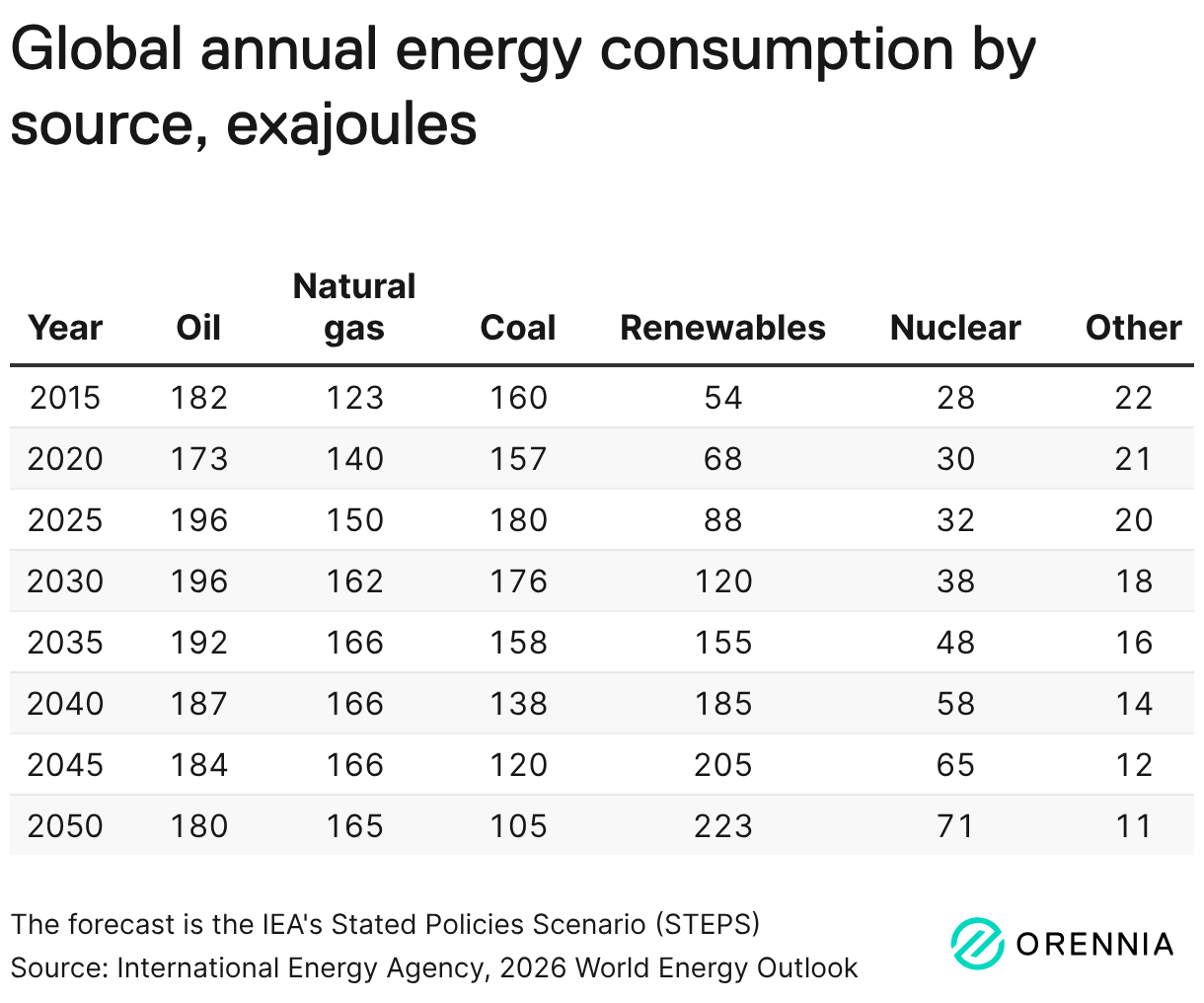
Under the International Energy Agency’s Stated Policies Scenario (STEPS) in its 2026 World Energy Outlook, oil demand in 2050 is roughly what it is today, while natural gas grows by ~20%. The big change is the growth of renewables and the decline of coal.
Today, renewables supply roughly 15% of global energy but are expected to grow rapidly. The Global Energy Review 2026 reports that solar PV provided more than 25% of the increase in global energy demand in 2025, the first time a modern renewable source contributed the largest share of global energy-demand growth.
Renewables are projected to overtake oil as the largest source of global energy by 2045 under the scenario, reaching 223 exajoules by 2050. Coal use, meanwhile, drops by more than 40% from today out to 2050.
India, Southeast Asia and Africa want more cars, more factories and, above all, more air conditioning, to the point that cooling now beats heating as the world’s bigger energy need. Rising incomes and 650 million more people by 2035 push up the need for transport, cooling and computing. There’s also additional demand from AI data centers.
Meeting that demand is a flood of cheap solar and batteries along with a wave of new oil and LNG from the Americas.
The IEA calls the 2026 Strait of Hormuz disruption the largest energy supply shock in history: 2.8 billion barrels of oil lost and diesel prices above $200 a barrel.
Like the 1970s oil crises, it’s pushing countries towards energy security through diversified supply, homegrown energy and faster electrification. It could also leave the world with an oil and gas glut and lower prices once the Strait reopens.
What’s the state of the energy transition? The Iran war has turned renewables and electric vehicles into energy security tools, which is speeding up the clean energy transition in oil- and gas-importing countries.
But the IEA warns that energy security alone won’t meet climate goals: even its fastest crisis-response scenario only cuts projected global warming from 2.5°C to 2.4°C, partly because some countries lean on their own coal.