
Aaron Foyer
Director, Research
Aaron Foyer
Director, Research
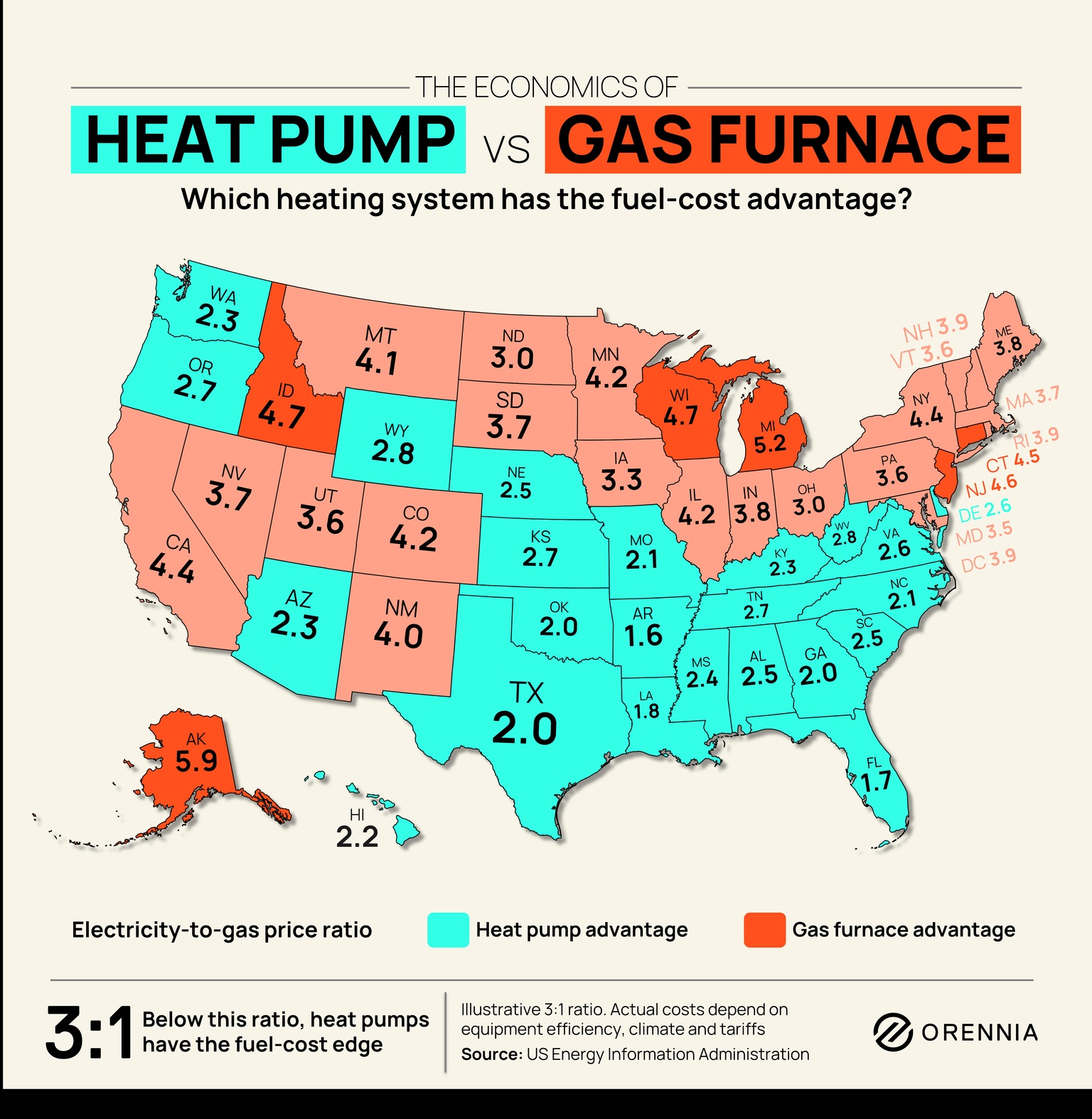
A heat pump can deliver roughly three times as much heat per unit of energy as a gas furnace. But electricity prices vary wildly across the US, creating some unexpected winners and losers in the battle to keep homes warm.
What is the map showing? The map compares residential electricity and natural gas prices in each state, converted to an equivalent energy basis to show how much consumers pay for the same amount of energy.
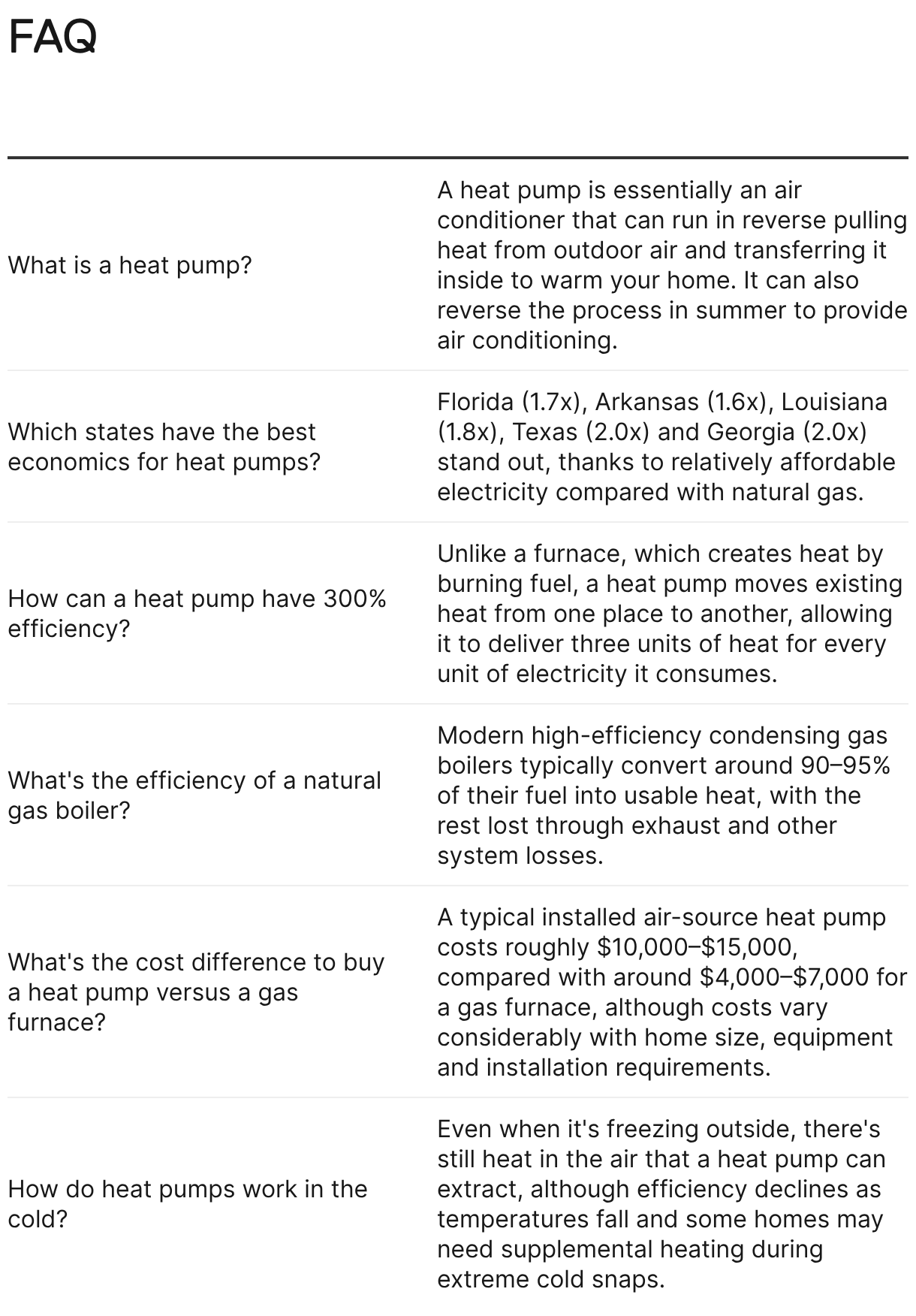
Heat pumps are roughly three times as efficient as gas furnaces, meaning electricity can cost up to three times as much per unit of energy before gas becomes the cheaper option.
State-by-state differences
The economics of heating vary dramatically across the country. In Alaska, electricity costs nearly six times as much as natural gas on an equivalent energy basis (5.9x), making gas furnaces the clear price winner, while Texas (2.0x), Florida (1.7x) and Arizona (2.3x) are much more attractive markets for heat pumps.

The dividing line is roughly 3:1: states below that threshold generally favor heat pumps, while those above it tend to favor gas furnaces.
How we made the map
The data reflects average residential energy prices from the US Energy Information Administration over the past year. Electricity and natural gas prices are expressed in dollars per million British thermal units (MMBtu), allowing a like-for-like comparison of energy costs.
The work assumes a seasonal heat pump coefficient of performance (COP) of 3.0 and a natural gas furnace annual fuel utilization efficiency (AFUE) of 95%. The resulting break-even electricity-to-gas price ratio is approximately 3.2:1, meaning heat pumps have a lower operating cost below that threshold.
Insights for an evolving energy landscape delivered to your inbox.