
Aaron Foyer
Director, Research
An energy security case study
Aaron Foyer
Director, Research
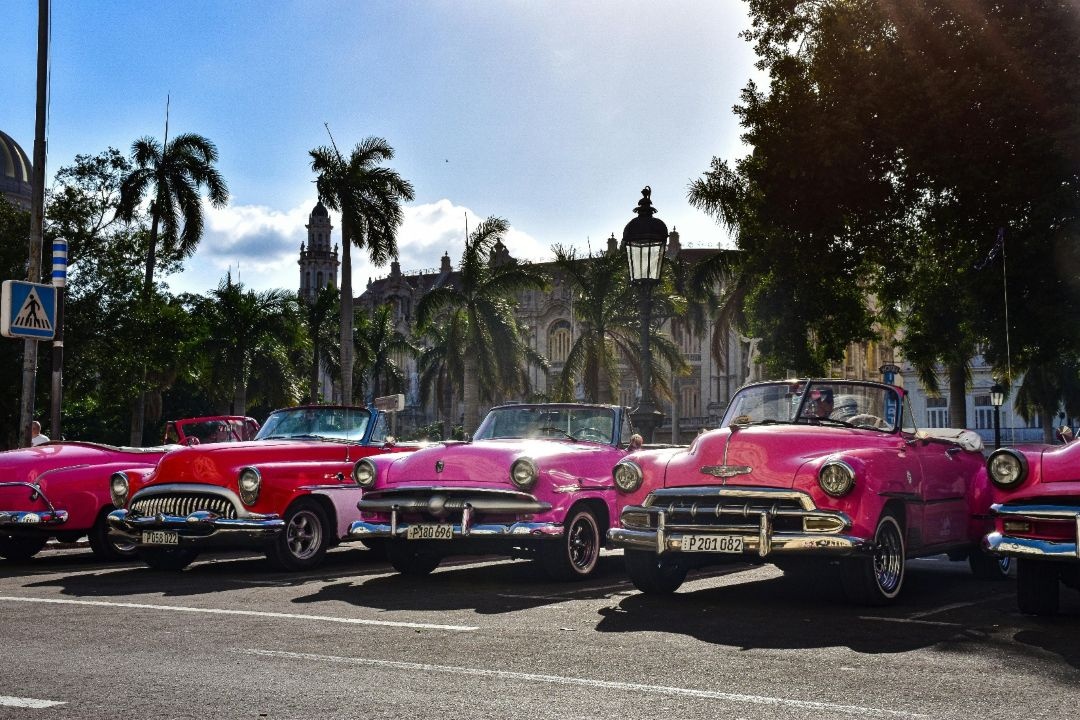
Retro American cars in Havana, Cuba // Pexels
Has Cuba inadvertently become one of the most compelling case studies on how energy sustainability is now energy security?
Rewind the clock back just a couple of years and you would be hard pressed to find a sustainability-minded advocate pointing to the Caribbean nation as an example of what progress should look like. Highly oil reliant and getting most of its power from fossil fuels, the nation has spent the better part of a decade lurching from one energy crisis to the next, with rolling blackouts now stretching up to 20 hours a day in some parts of the island.
In many ways, the country is a microcosm of troubles around the world in 2026, as it faces energy shortages and challenges providing fuel for its grid. But as the old saying goes, constraints breed creativity, and what has emerged out of the country’s energy constraints is an economy increasingly run on solar power, batteries and electric vehicles. This wasn't a managed transition or a policy experiment, but a system in freefall that needed to adapt.
Cuba is often depicted as a country stuck in the past century. Yet, through geopolitical happenstance, the Caribbean nation off the coast of Florida might be showing us the blueprint to a energy secure future. Let’s step into the heat.
One of the most iconic sights of Havana, the capital of Cuba, are the classic American cars that line its streets. Burnt orange Chevy Bel Airs, baby blue Ford Fairlanes and salmon pink Plymouth Belvederes make the entire city seem like a scene straight out of Pleasantville. But far from Cubans being big Tobey Macguire fans, this is a consequence of a previous American blockade.
In 1959, following Fidel Castro’s communists seizing power, the US cut off the supply of new vehicles and parts to the island, which left the Cubans with no choice but to keep their existing cars running indefinitely. The country spent decades improvising car maintenance, swapping Soviet-built engines and parts into American cars. Look under the hood of a ’57 Chevy in Santa Clara and you’re likely to find a 1980s Lada diesel engine.
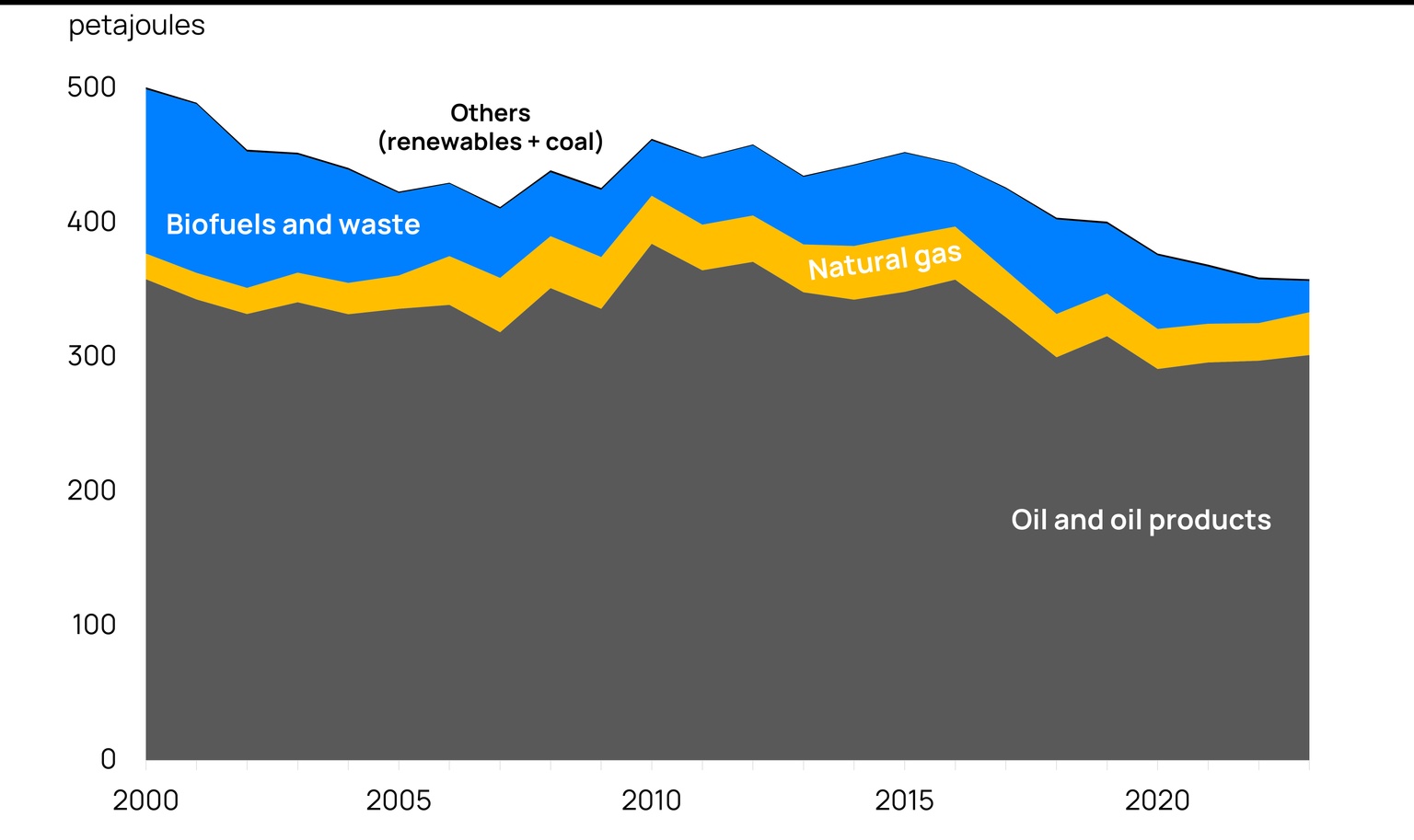
Source: International Energy Agency
But when the Soviet Union collapsed, the country’s supply of spare parts dried up. So, too, did much of Cuba’s energy imports, forcing the government to rely largely on Venezuelan oil and ultimately restrict sales of new cars to preserve desperately scarce fuel supplies.
Since then, and despite a disastrous attempt by President Raul Castro to allow for some liberalization for new car sales, Cubans have largely been locked out of the new car market.
When the US imposed an oil blockade on Venezuela late last year, it took the opportunity to impose one on Cuba as well, now described by the New York Times as the most effective blockade of the island since the Cuban Missile Crisis.
Its fuel has all but vanished.
Cuba’s electric vehicle story is not about Teslas, but about the motorina — cheap Chinese-made electric scooters that cost between $1,000 and $2,800 and have become the island’s dominant form of transport.
The EVs, of course, had to be Chinese. American vehicles are still blocked by an embargo and European suppliers won’t touch the Cuban market for fear of secondary sanctions. In 2018, the communist nation signed on to China’s Belt and Road Initiative, opening the door for preferential trade terms and financing for Chinese goods.
The adoption of EVs on the island was hastened after the government outlawed importing gas-powered motorcycles, leaving electric models as the only choice for new purchases.
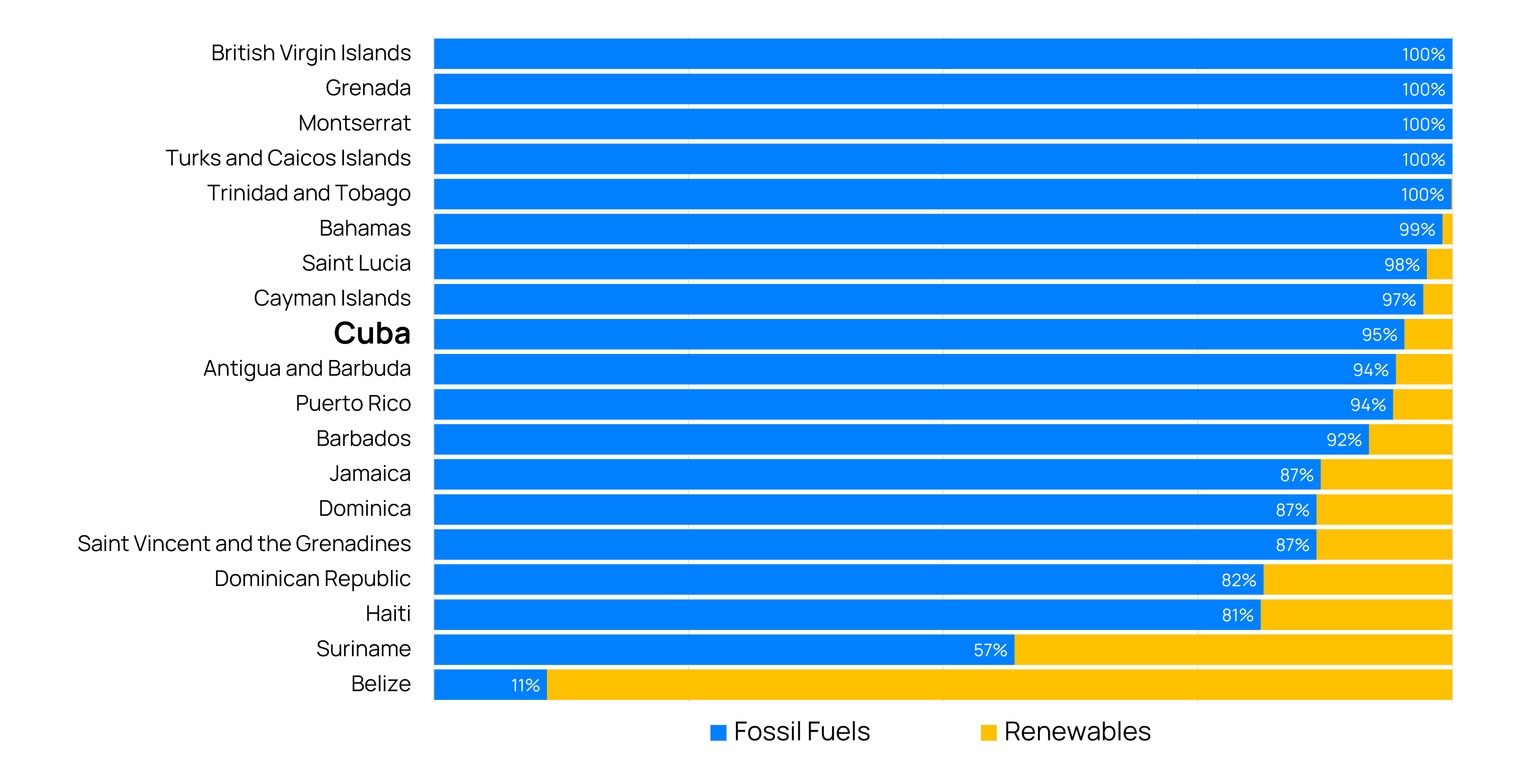
Source: Energy Institute - Statistical Review of World Energy
And it’s not hard to understand the government’s logic: your typical electric motorcycle used in Cuba consumes about as much electricity as a fridge. For a country that can’t import fuel and now regularly experiences grid blackouts, a vehicle that can sufficiently charge for a day’s worth of riding in a three-hour window is an energy planner’s dream.
Consumers have noticed: Under the country’s current regulations, a new gas-powered car starts at $15,900. That’s astronomical for locals, where the average Cuban salary is just $16 per month. Given that, a $2,800 price tag for the electric alternative looks not just affordable, but transformative.
By 2024, gasoline prices increased fivefold, making a single tank of fuel more expensive than the average state worker’s monthly salary. As Havana EV rider Alejandro Vasallo put it: “Fuel is a lost cause. Right now, having an electric motorcycle here is life itself.”
An estimated 300,000 electric vehicles are on Cuban roads today, a decent share of the country’s total of 500,000 registered cars.
Through its Belt and Road partnership, China is now supplying Cuba with electric vehicles, solar panels, batteries and grid equipment.
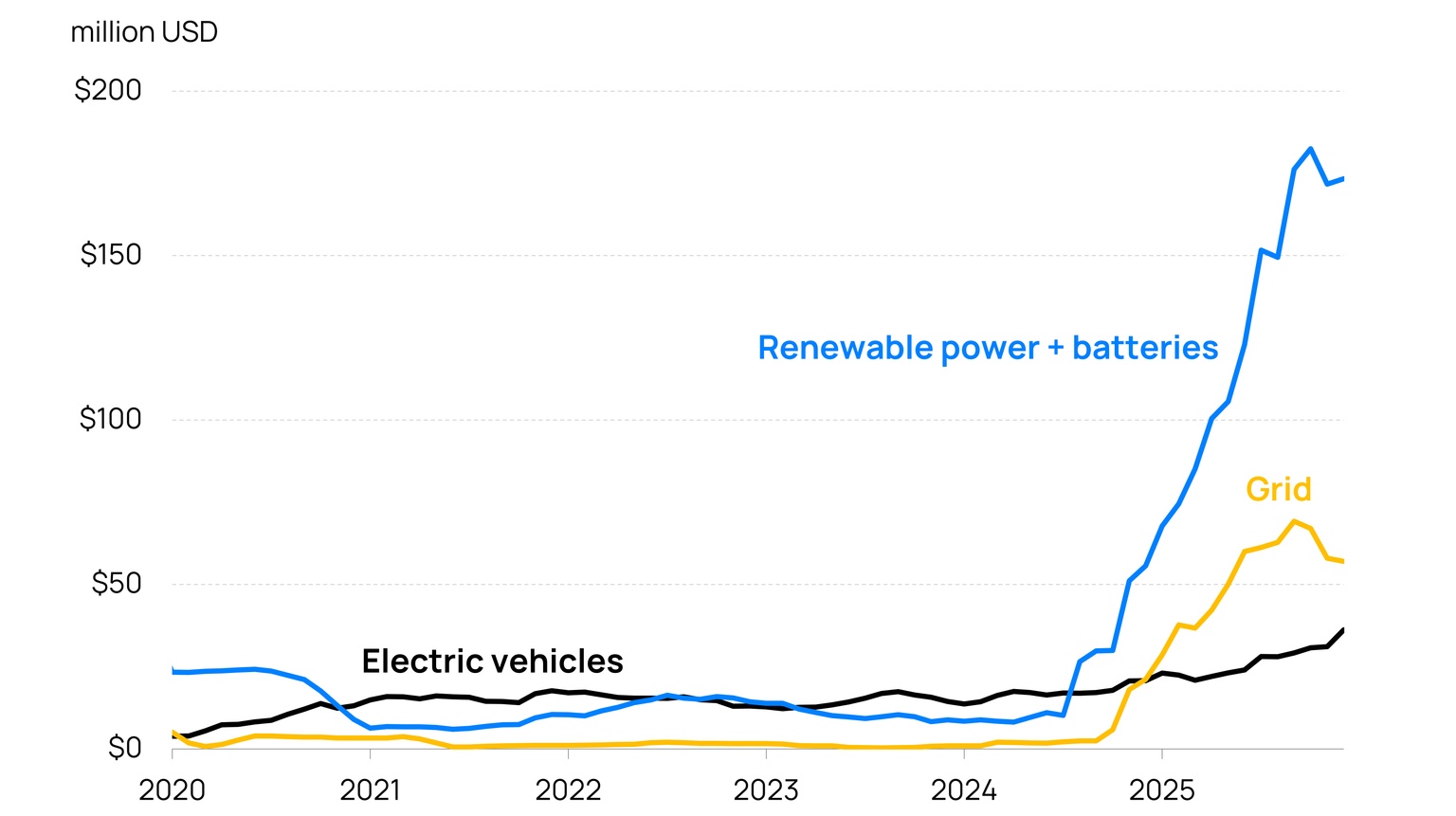
Between April 2024 and April 2025, Cuban imports of Chinese solar panels grew 34-fold, faster than any country in the world, according to Ember. Solar’s share of total electricity generation on the island jumped from 5.8% to over 20% over the last year, driven not by climate ambition, but by the physical collapse of thermal power alternatives.
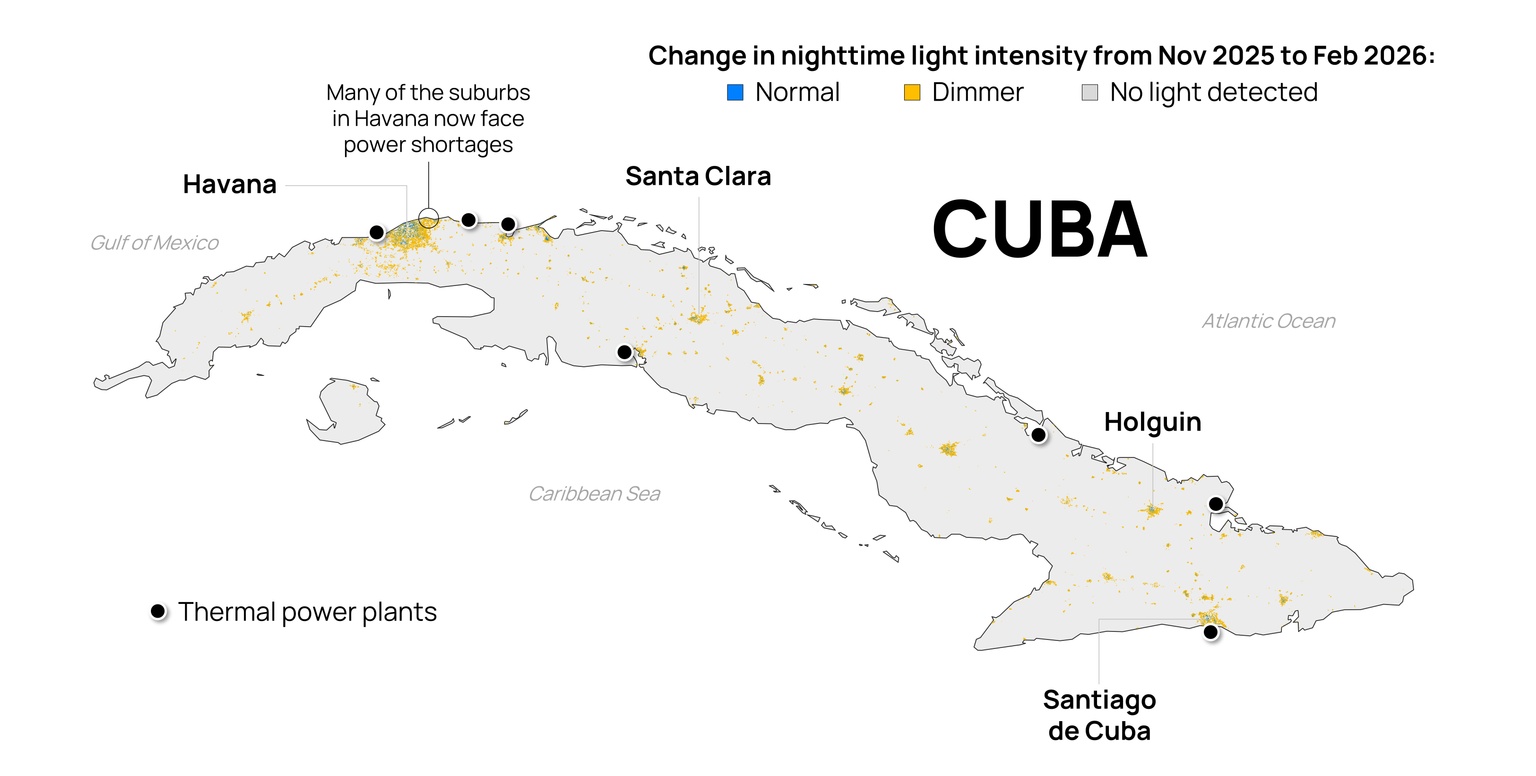
Source: NASA Black Marble
Cuba’s government has committed to building 92 solar parks totaling two gigawatts by 2028, with dozens of parks already completed. Each one requires ~$16 million in imported equipment, so China’s financial support is pivotal.
But the optimistic solar story carries a critical asterisk: Of the 55 solar parks that were planned for 2025, just four included battery storage. Without batteries, solar generation vanishes at sunset, right when the island hits peak demand and the worst of its blackouts are occurring.
Nonetheless, for a country where blackouts once stretched 20 hours a day and a tank of gas cost more than a month's salary, Cuba generating one-fifth of its electricity from the Sun is an incredible milestone.
The real story here isn’t Cuba. It’s that we’ve entered an era where a new suite of technologies have transformed how countries can become energy secure.
In the past, most of the options on how to deal with a fuel crisis involved oil consumption management. Following the oil embargo of 1973, the US set up the Strategic Petroleum Reserve to act as a shock absorber for a similar event in the future. Congress also passed fuel economy standards, which led to a wave of smaller, more efficient cars to hit the consumer market.
Source: Ember
But the mass manufacturing of renewable technologies and batteries means it’s now affordable to build gigawatt-scale power generation and transportation systems that are resistant to foreign disruptions of imports.
From Havana to Hamburg: For the second time in four years, Europe is facing a gas crunch because of a war it did not start. Natural gas prices have jumped 86% on the continent since the start of the conflict. Diesel prices have jumped 17.5% in Portugal and 34.3% in Spain.
Europe gets about half of its gas supplies from regions that are either antagonizing the continent or seemingly unreliable — Russia, the US and the Persian Gulf. It’s no wonder that a group of 10 countries, including the UK, Germany and France, recently agreed to build 100 gigawatts of offshore wind in the North Sea, enough to power roughly 145 million homes.
The deal was framed as much about energy security as it was about sustainability. “By planning expansion, grids and industry together and implementing them across borders, we are creating clean and affordable energy, strengthening our industrial base and increasing Europe’s strategic sovereignty,” said German Economy Minister Katherina Reiche.
And of course, China — which has spent the last two decades building a fortress of renewable generation, a fleet of electric vehicles and the manufacturing infrastructure to support it all — looks smarter with each passing energy crisis.
Bottom line: What Cuba discovered by accident, many parts of the world are starting to replicate deliberately. The era of energy security meaning “secure your oil supply” is over. The new playbook is to generate it yourself, store it yourself and move it around yourself.
The cosmic irony of it all is Havana was filled with American gas-powered cars because of one American blockade and will now switch over to Chinese-made electric vehicles because of another.
Insights for an evolving energy landscape delivered to your inbox.