
Aaron Foyer
Director, Research
Aaron Foyer
Director, Research
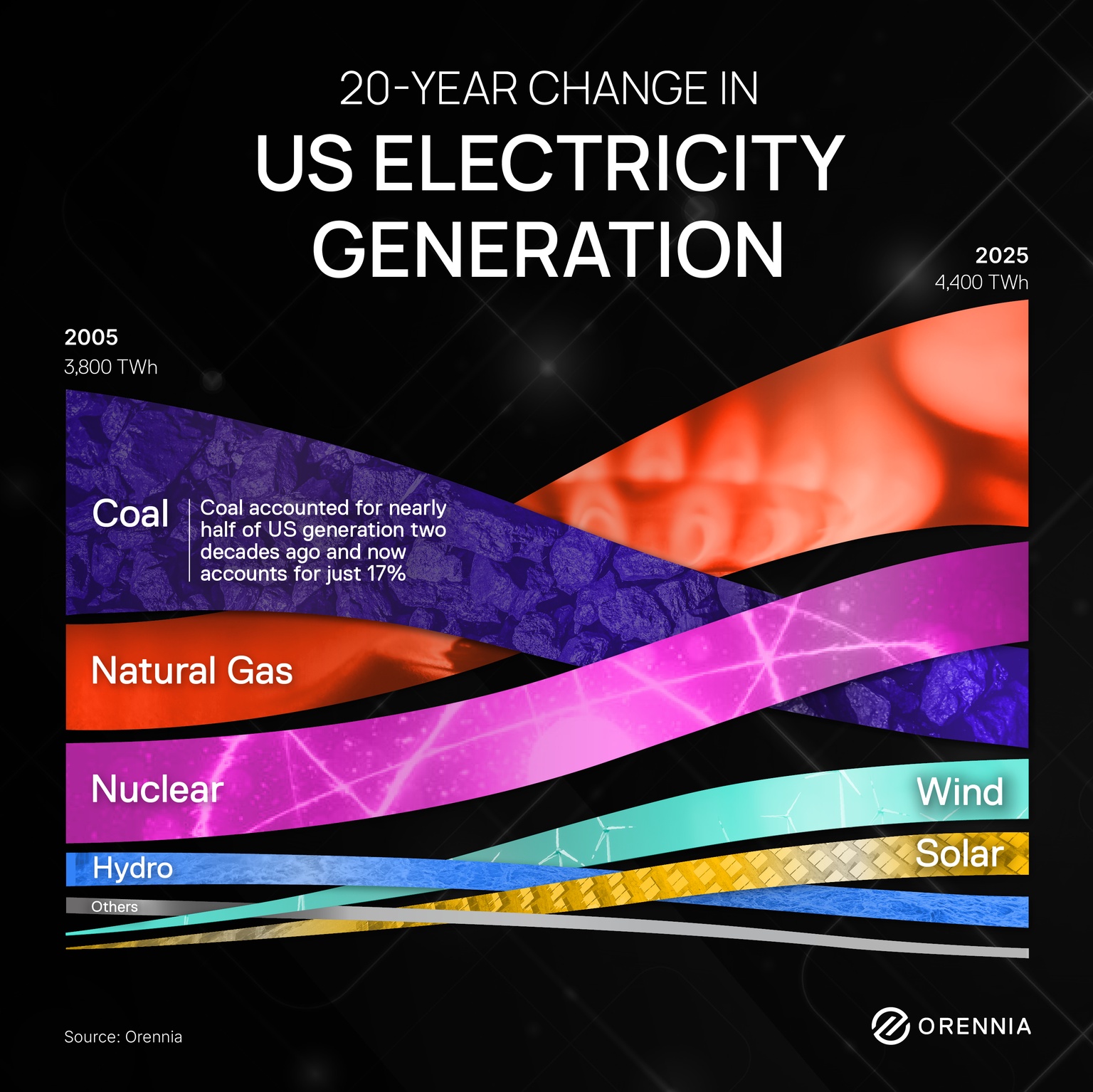
Two decades ago, coal generated half of all US electricity. Today, it generates less than a fifth. The US generates approximately 4,400 terawatt-hours of electricity annually, ranking second globally behind China. That's up from 3,800 terawatt-hours in 2005, a 16% jump in output over two decades, even as the composition of that output changed dramatically.
Coal’s collapse: The decline in coal has been swift. Since its peak in 2007, coal generation has fallen by over two-thirds, displaced by gas, wind, and solar. The last major coal-fired power plant built in the US, the 932 MW Sandy Creek Energy Station in Texas, was connected to the grid in 2013.
The main beneficiary was natural gas. Horizontal drilling and hydraulic fracturing flooded the market with cheap shale gas, and Henry Hub spot prices crashed from $8.88/MMBtu in 2008 to $2.77 by 2012. Utilities retired and repurposed coal plants and built gas turbines.
Gas ultimately overtook coal in 2016. Over the full 20-year period, gas generation more than doubled, increasing by 968 terawatt-hours.
Wind and solar: Over the past 20 years, electricity from wind and utility-scale solar has increased to 17% of generation, compared to less than 1% in 2005.
It was economics that drove the buildout: Between 2010 and 2023, the average unsubsidized cost of wind electricity fell ~70% and the average unsubsidized cost of solar electricity fell roughly 85%.
Nuclear and hydro: The two sources have remained essentially unchanged throughout the transformation. Nuclear output has hovered between 770 and 810 billion kilowatt-hours for the better part of two decades, a carbon-free baseload that still generates more clean electricity annually than wind and solar combined, despite attracting less of the political attention.
Hydropower tells a similar story, its share of total output declining not because less water flows through the turbines, but because everything else grew around it. Together, the two sources account for roughly a quarter of US generation — the grid's ballast, largely unchanged while the fuel mix above them was transformed beyond recognition.
Big picture: The grid that emerged from two decades of transition, one that’s cleaner, more diverse and structurally different from anything its designers imagined, now faces a demand surge unlike anything seen since the postwar electrification of the American suburbs.
Insights for an evolving energy landscape delivered to your inbox.